
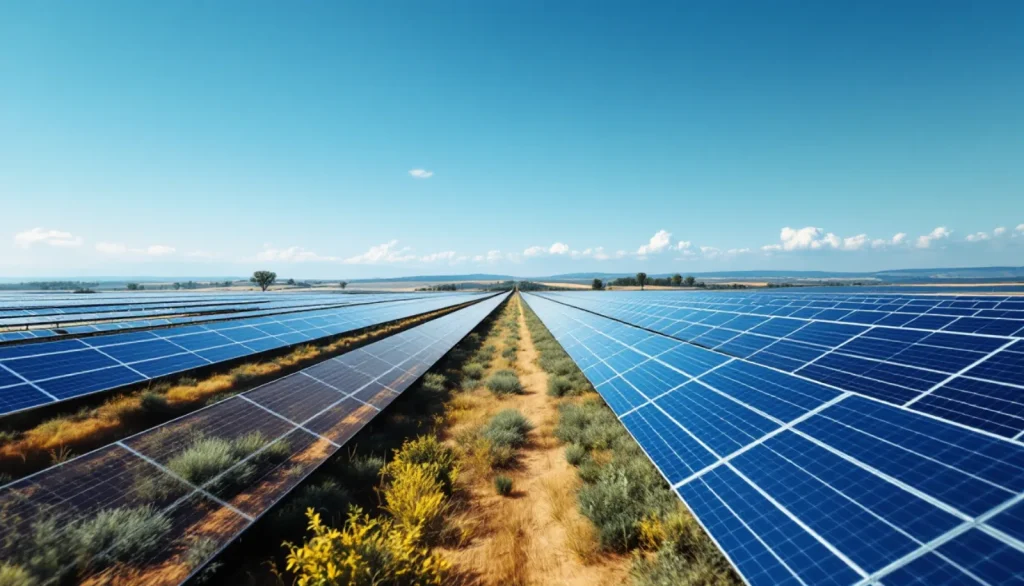
The NY DEC Solar Pesticide Certification category is the first applicator credential in the United States written specifically for vegetation maintenance on utility-scale solar generation sites. The New York State Department of Environmental Conservation finalized the new sub-category under 6 NYCRR Part 325, effective December 26, 2025, and any contractor spraying herbicide inside the fence of a 5 megawatt or larger solar facility in New York now needs a certified applicator who carries it.
The short version
- NY DEC created a dedicated Solar Power Generation Facility Vegetation Maintenance certification sub-category, effective December 26, 2025.
- Applies to utility-scale solar facilities, generally 5 MW and larger, including agrivoltaic and pollinator-habitat sites.
- Distinct from Category 3a (Ornamental and Turf), Category 5 (Aquatic), and Category 6 (Right-of-Way). Holders of those categories are not automatically grandfathered in.
- Exam covers panel-row drift control, pollinator protection, sheep-grazing co-management, and herbicide selection around galvanized steel racking.
- Operators serving New York solar farms should test at least one applicator into the category before the 2026 mowing season closes.
What the rule says
On December 26, 2025, the NY DEC Division of Materials Management adopted a new commercial pesticide applicator certification sub-category covering vegetation maintenance at solar power generation facilities. The full regulatory citation is 6 NYCRR Part 325.17, and the rulemaking docket lists the public comment period that closed in September 2025, plus the responses to comments document published alongside the final rule.
The category sits inside the commercial applicator certification system that also includes 3a (Ornamental and Turf), 5 (Aquatic), 6 (Right-of-Way), and 7 (Structural). It is a stand-alone sub-category, not a sub-set of 6 (Right-of-Way), even though many solar vegetation contractors come out of the utility ROW world. NY DEC explicitly stated in the response-to-comments document that holders of Categories 3a, 5, 6, and 7 are not automatically authorized to apply pesticides at solar facilities and must test into the new category to do so commercially.
Scope is herbicide application for vegetation control on the grounds inside the fence of a utility-scale solar power generation facility. The rule references facilities generally above 5 MW of nameplate capacity, which captures essentially every large ground-mount solar installation in upstate New York, including the Tier 4 transmission-attached projects coming online under NYSERDA contracts.
Why this category exists
Solar vegetation work is not turf work, and it is not roadside ROW work. The risk profile is different. Panel rows sit 18 to 36 inches off the grade, which traps drift. Many sites are seeded with pollinator-friendly mixes under New York’s Solar Energy Standard incentive points, which makes broadcast herbicide use a compliance issue, not just a stewardship issue. A growing number of New York solar farms run sheep co-grazing under agrivoltaic agreements, which adds a livestock-residue layer to herbicide selection. And the steel racking is galvanized, so certain salt-based residual products can accelerate corrosion if applied incorrectly.
NY DEC heard from solar developers, sheep graziers, and pollinator habitat consultants that the existing categories did not test on any of this. A 3a-certified applicator passes an exam built around residential lawns and golf courses. A Category 6 ROW applicator passes an exam built around guardrails and substation gravel. Neither covers the panel-row drift physics that defines solar vegetation work.
Who needs to test in
Any commercial applicator who plans to spray herbicide inside the fence of a New York solar facility above the 5 MW threshold needs the new sub-category on their card. That includes:
Dedicated solar vegetation contractors like the regional firms that bid the NextEra, EDF Renewables, and Cypress Creek O&M portfolios. Right-of-way contractors who have added solar work as a vertical, including the Asplundh and Davey Resource Group business lines that now bid utility solar alongside transmission corridor accounts. Landscape maintenance operators who sub in for a developer’s first-year warranty period. And, increasingly, the in-house vegetation crews kept on the books by larger asset owners.
Homeowners with a 10 to 20 kilowatt residential rooftop or ground-mount system are not affected. The rule is built around utility-scale infrastructure, not residential solar.
By the numbers
| Item | Detail |
|---|---|
| Rule citation | 6 NYCRR Part 325.17 (sub-category) |
| Effective date | December 26, 2025 |
| Threshold | Utility-scale solar, generally 5 MW and above |
| Existing categories grandfathered in? | No. 3a, 5, 6, 7 holders must test in separately |
| Exam format | Closed book, NY DEC-administered, similar in length to Category 6 |
| Renewal | Aligned with NY commercial applicator 3-year cycle |
| CEU requirement | Counted within the existing commercial applicator CEU pool |
What operators should do
If your firm services even one utility-scale solar site in New York, the 2026 mowing season is the soft deadline. NY DEC has signaled that enforcement will ramp through the year and that landowner contracts written by developers are already referencing the new sub-category as a required qualification. Operators who do not have at least one certified applicator on the new category by midsummer 2026 will start losing renewal bids.
The practical path is to identify the senior applicator on each crew that touches solar work, work them through the NY DEC study materials, and book the exam through a regional DEC office. Build the exam fee and study time into the 2026 training budget. Update the safety data sheet binders and the herbicide selection chart kept in the truck to flag which products are cleared for galvanized racking and which are restricted on pollinator habitat sites. And review the agrivoltaic sheep-grazing contracts on each site for the pre-grazing interval written into the developer’s habitat management plan.
For background on the underlying applicator structure, see our explainer on Pesticide Applicator License Category 3a and the broader regulatory landscape shaping the industry. Sites that mix solar vegetation work with pollinator strips should also review the NY neonicotinoid ban, which applies in parallel.
Context: the New York solar buildout
New York’s Climate Leadership and Community Protection Act set a 70 percent renewable electricity target by 2030 and 100 percent zero-emission electricity by 2040. The NYSERDA Tier 4 procurements have brought multiple gigawatts of new utility-scale solar into the development pipeline upstate, and the buildout has outpaced the regulatory infrastructure for managing vegetation on these sites. The new certification category is part of how New York is catching the regulatory framework up to the physical buildout.
Pennsylvania and New Jersey vegetation contractors should watch this rule closely. Multi-state operators bidding into the PJM solar pipeline have told trade press that they expect at least one neighboring state to mirror the New York structure within 18 to 24 months. The cleanest path to a multi-state solar vegetation practice is to get applicators in the door on the New York exam first, then carry that body of knowledge into the next state’s rulemaking.
FAQ
Does the new category replace Category 6 (Right-of-Way) for solar work?
No. Category 6 still applies to transmission corridors, substation gravel, and similar utility ROW work. The new sub-category is solar-specific and is required in addition to whatever other categories an applicator already holds.
What about smaller community solar projects below 5 MW?
The rule language references utility-scale facilities generally at or above 5 MW. Smaller community solar gardens fall back to the standard commercial applicator categories. Developers writing maintenance contracts on community solar are still free to require the new category as a contract spec.
Is there a homeowner version of this?
No. The rule is a commercial applicator sub-category. Homeowners spraying around a residential rooftop system are not affected.
How does this interact with pollinator habitat scoring under NYSERDA?
NYSERDA awards points to projects that establish certified pollinator habitat. The new applicator category is not a NYSERDA scoring item directly, but the exam tests on pollinator-aware herbicide selection. Contractors serving pollinator-scored sites will find the exam content closely aligned with their existing habitat management plans.
When is the next exam window?
NY DEC has published the standard commercial applicator exam calendar through regional offices. Operators should book early because the first two exam cycles after the December 2025 effective date are expected to fill quickly.
Bottom line
The new Solar Power Generation Facility Vegetation Maintenance sub-category is the first of its kind in the country, and New York has set the template that neighboring states are likely to follow. Operators who bid utility-scale solar work in the Empire State should have at least one applicator carrying the new card by the 2026 mowing season. For the cost side of commercial vegetation work and how to budget the training, see our coverage of professional weed killer products and the commercial weed killer guide.