
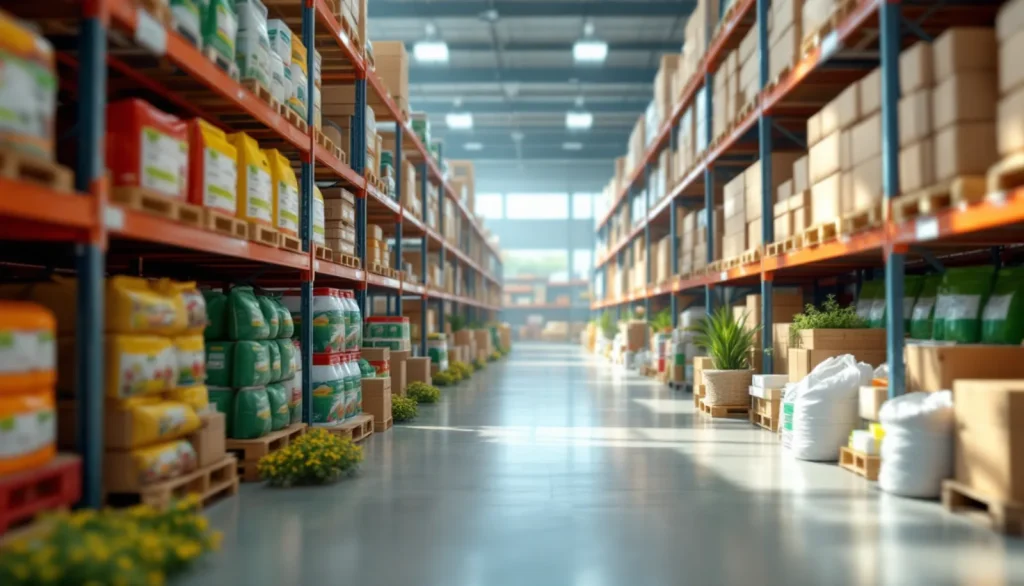
Buying lawn care supplies as a homeowner in 2026 means choosing between three very different retail channels: big-box (Home Depot, Lowes, Tractor Supply), pure online (Yard Mastery, Sunday, Amazon), and pro-tier distributors (SiteOne Landscape Supply, Ewing Outdoor Supply, Lesco branded outlets, John Deere Landscapes legacy locations). The first two are the only channels most consumers know about. The third is where every professional lawn care company in North America buys, and most homeowners have no idea those doors are open to them. This guide walks through what is actually stocked at each, how the pricing works, and how to qualify for SiteOne pro-pricing as a residential buyer.
The short version
- SiteOne is the dominant pro distributor (700+ branches, $4B+ annual revenue) and the gateway brand for the Lesco line of fertilizers, herbicides, and seed.
- Lesco is now a SiteOne house brand. Pro 24-0-11 50 lb bag runs $32 to $42, vs Scotts equivalents at $55 to $70 retail for less product.
- Ewing Outdoor Supply (270+ branches) is the irrigation-and-landscape specialist, especially strong in Hunter, Rain Bird, and Toro parts.
- Andersons is the second-tier pro fertilizer brand, often found at independent garden centers and through some farm supply channels.
- SiteOne accepts residential walk-ins at most branches with a phone number and email. Pro pricing is rarely volume-gated.
- Cash-and-carry on a single 50 lb bag of Lesco 24-0-11 fertilizes 14,500 sq ft. That is your math anchor.
The three retail tiers, ranked
Big-box (Home Depot, Lowes, Tractor Supply, Ace Hardware) is the convenience tier. The product mix is built around brand recognition (Scotts dominates the fertilizer aisle, Ortho dominates the herbicide aisle, Spectracide fills the gap-priced slot). Bag sizes are smaller, coverage rates are lower, and prices per pound of active ingredient are 40 to 80% higher than the pro tier. The big-box tier is where most American homeowners buy 90% of their lawn care supplies, and it is also why most American lawns are mediocre.
Pure online (Amazon, plus direct-to-consumer brands like Sunday Lawn Care, Yard Mastery, Lawnbright) is the curated tier. Sunday in particular has built a respectable program around custom soil-based recommendations and pouch-delivered liquid fertilizer. It is a solid pick for homeowners who hate retail decision fatigue. The trade-off is that you pay a brand premium of 20 to 40% over equivalent pro product, and you cannot easily customize.
The pro tier (SiteOne, Ewing, Andersons-stocking independents, regional fertilizer co-ops) is where the actual landscape industry buys. SiteOne alone moved over $4 billion in product in 2024, and that is where the real selection of granular fertilizers, professional herbicides, and turf-type seed lives. Our lawn care cost guide covers what contractors charge to apply this product, but the materials themselves are what we are covering here.
Pro distributors vs big-box: side-by-side pricing
| Product | Big-box retail | SiteOne/Lesco | Coverage (5,000 sq ft) | Cost per 1,000 sq ft |
|---|---|---|---|---|
| Scotts Turf Builder 32-0-4 (12,000 sq ft bag) | $62 | n/a (Scotts retail only) | $26 partial bag | $5.20 |
| Lesco 24-0-11 (50 lb bag, 14,500 sq ft) | n/a (pro only) | $36 | $12 partial bag | $2.40 |
| Roundup ready-to-use (1.33 gal) | $28 | $22 concentrate equiv | $10 to $14 | $2.00 to $2.80 |
| Prodiamine 65 WDG (5 lb) | n/a (pro only) | $140 (treats 100,000 sq ft) | $7 (one application) | $1.40 |
| Tenacity (8 oz bottle) | n/a (pro only) | $72 (treats 40,000 sq ft) | $9 | $1.80 |
| Turf-type tall fescue seed (50 lb) | $185 | $120 (pro blend) | $60 (overseed rate) | $12.00 |
The pattern is consistent. Big-box wins on convenience for small lawns and one-off purchases. SiteOne and Lesco win on every other axis: cost per 1,000 sq ft, active ingredient concentration, bag size, slow-release nitrogen percentage, and product breadth. The price gap on prodiamine alone (which is genuinely not available at consumer retail) is dramatic enough to pay for an annual SiteOne trip by itself.
How to actually walk into SiteOne as a homeowner
SiteOne does not advertise to residential consumers but does not block them either. Walk into any branch (find one at siteone.com/locations), tell the counter you are a homeowner buying for your own lawn, and they will set up a customer account in about three minutes. You will need a name, address, phone, and email. They do not require a business license, a tax ID, or a minimum order. Pricing is set on a customer-account basis and is typically the same as the smaller landscape companies pay (the largest national accounts get a few percent more, but the spread is narrow).
The key thing to know: SiteOne is a counter-and-yard operation. You will not browse aisles. You walk up to a counter, tell them what you want, and they pull it from the yard or warehouse. So you need to know what you are buying before you arrive. The SiteOne product catalog at siteone.com is searchable by category. Print or screenshot what you want, walk in, hand them the SKU. You will be in and out in 15 minutes with product that is materially better and cheaper than anything at the big-box store.
Counter staff at SiteOne are mostly former landscapers or current applicators. They are competent agronomists and will answer real questions. Ask about regional pre-emergent timing, ask about disease pressure in your zip code, ask which fertilizer blend they would use on your turf species. You are getting consulting included in your trip.
Lesco: the pro brand that quietly powers half the industry
Lesco started as an independent fertilizer-and-equipment brand serving the golf and commercial turf market. It was acquired by Deere and Company in 2007, sold to John Deere Landscapes (which became SiteOne after a 2014 private equity buyout and 2016 IPO), and is now SiteOne’s controlled-brand line. Lesco granular fertilizer is the de facto industry standard for residential lawn care application services, and the spreader-grade prills are sized for commercial broadcast spreaders.
The classic Lesco SKUs every homeowner should know: 24-0-11 (the all-around feed, 50% slow-release SCU, perfect for late spring and summer applications), 18-24-12 (the starter fertilizer for new seed and aeration plus overseed), 0-0-7 with prodiamine (combo pre-emergent and light potassium feed for early spring), and the 32-0-4 carbon-coated late season pick. All four are sold in 50 lb bags, all four cover 14,500 to 16,000 sq ft at label rate, and all four are priced 30 to 50% below the consumer Scotts equivalent.
The application rate math on Lesco 24-0-11: 100 divided by the first NPK number (24) gives you 4.17 lbs of product per 1,000 sq ft to apply 1 lb of nitrogen. A 50 lb bag covers 11,990 sq ft at that rate. Most homeowners are applying 0.75 lb of N per 1,000 sq ft, which stretches the bag to about 16,000 sq ft. Our NPK fertilizer guide walks through this math in more detail.
Ewing Outdoor Supply: the irrigation specialist
Ewing operates around 270 branches concentrated in the south and southwest, and it is the strongest pro distributor for irrigation specifically. If you are installing or repairing a sprinkler system, Ewing is where the parts are stocked. They carry the full Hunter, Rain Bird, and Toro residential and commercial product lines, plus Rachio and Hydrawise smart controllers, plus drip irrigation product from Netafim and DIG, plus the PVC and poly fittings every irrigation tech needs.
Ewing pricing is set the same way as SiteOne: customer-account based, no volume gate, walk-in welcome. The selection on rotors, valves, and emitter heads is genuinely superior to anything at Home Depot. If you are running our drip irrigation install guide at home, your Ewing trip will save you 30 to 50% on the fittings versus big-box retail. Some Ewing branches also carry a turf and ornamental product line, but it is narrower than SiteOne’s.
The Andersons and the second-tier pro brands
The Andersons (publicly traded, NASDAQ: ANDE) is the second-largest pro fertilizer manufacturer after Lesco. Their HCU (humic-coated urea) line is a respectable hybrid product, and their Contec DG (dispersible granular) line offers very high-quality nitrogen release patterns. Andersons product is harder to source than Lesco (it is not a SiteOne house brand) but is available through independent garden centers, regional ag co-ops, and some Ewing branches.
Other pro brands worth knowing: Pennington (seed and fertilizer, strong in the south), DLF Pickseed (the premium turf-type fescue and ryegrass seed source), Barenbrug (Dutch breeding, very high-quality cultivars), and Yard Mastery (a direct-to-consumer pro-tier brand started by the YouTube channel of the same name, decent product at premium pricing). For sod direct from the farm, search your state turfgrass association for member growers. Most will ship pallets within 200 miles.
Herbicide product matrix: what you should actually have on the shelf
A serious DIY lawn program needs four herbicides on the shelf, all available through SiteOne or Ewing. One, prodiamine (Lesco brand or generic, granular or sprayable) for spring and fall pre-emergent crabgrass control. Two, three-way ester broadleaf herbicide (Speedzone Lawn, T-Zone SE, or Trimec Classic) for selective post-emergent on dandelion, clover, plantain, ground ivy. Three, glyphosate (Roundup PROFESSIONAL is the SiteOne SKU, in 2.5 gal jugs, and is materially cheaper than the retail jugs) for non-selective spot kills on driveways, beds, and fence lines. Four, sulfentrazone or quinclorac for nutsedge, wild violet, and tough perennial broadleaf escapes.
If you have warm-season turf (Bermuda, Zoysia, St. Augustine) add an MSMA replacement product or a sethoxydim for grassy weed control. If you have cool-season turf with poa annua pressure, add a paclobutrazol or ethofumesate option. Most of these are restricted-use products requiring an applicator license to purchase in some states. Verify with your state department of agriculture before showing up at SiteOne. Our regulatory desk tracks the state-by-state restrictions.
Equipment: the supplies you forget to budget for
The product itself is only half the spend. A functioning DIY lawn care program also needs a quality broadcast spreader ($120 to $220 for an Earthway Ev-N-Spred 2150 or a Lesco rotary, $350 to $600 for a Lesco stainless commercial unit), a backpack sprayer ($75 to $180 for a Field King or Solo, $250 to $450 for a battery-powered Chapin or Birchmeier), a soil thermometer ($15) for pre-emergent timing (apply when soil hits 55 F), a soil probe ($60 to $90) for compaction and thatch checking, and a moisture meter ($25 to $80) for watering decisions.
If you are committing to multi-year DIY, add a turf knife, a hand cultivator for spot reseeding, a screened topdressing wheelbarrow, and a calibrated measuring jug for liquid concentrate. Total equipment investment for a serious homeowner program is $300 to $700 one-time, amortized across many years. SiteOne stocks all of this. So does Ewing for the irrigation-relevant pieces.
Seasonal supply cadence: what to buy when
February to March: prodiamine pre-emergent, soil test kit, late-winter spreader calibration. March to April: starter or all-purpose granular fertilizer, post-emergent broadleaf herbicide. May to June: second feed (slow-release 24-0-11 type), grub preventer if applicable, fungicide if patch disease is a problem in your area. July to August: spot herbicide, drought-related supplies (wetting agent, soil surfactant). September to October: aeration plus overseed kit (starter fertilizer, seed, soil amendment, possibly compost topdressing). November: winterizer high-K fertilizer, dormant herbicide spot work.
SiteOne and Ewing run their inventory peaks accordingly. Show up in early February for prodiamine and the pre-season order, in early September for seed and starter fert. Avoid the late-spring rush when commercial accounts are loading trucks before sunrise.
FAQ
Can a homeowner actually buy from SiteOne or is it dealers only?
Homeowners can absolutely buy from SiteOne. You walk into a branch, give them a name and address, and they set up an account. There is no volume minimum and no business license requirement. The few exceptions are restricted-use pesticides which require an applicator license under EPA FIFRA and state regulations.
Is Lesco actually better than Scotts?
Yes, materially. Lesco granular fertilizer typically has higher slow-release nitrogen percentages (35 to 50% SCU versus Scotts standard 20 to 30%), larger bag sizes (50 lb versus 12 lb to 17 lb), tighter prill size for spreader accuracy, and lower cost per pound of nitrogen. The exception: Scotts blends with Halts crabgrass preventer are reasonably formulated for what they are, and Scotts EZ Seed has no real equivalent.
What is the cheapest pro fertilizer right now?
The Lesco 24-0-11 50 lb bag at SiteOne in 2026 prices at $32 to $42 depending on branch and season, covering about 14,500 sq ft. That works out to roughly $0.07 per 1,000 sq ft per pound of nitrogen, which is the rough industry floor. Andersons HCU 18-3-18 in 50 lb bags through co-ops can occasionally undercut on a per-pound-N basis but availability is regional.
Do I need a pesticide applicator license to buy from SiteOne?
Only for restricted-use pesticides (RUPs), which are a small fraction of the catalog. General-use products (most fertilizers, most pre-emergents like prodiamine, most post-emergent broadleaf products, glyphosate) are available without a license. Restricted-use products require Category 3A Turf and Ornamental certification in most states. Check your state regulations.
What is the one supply purchase that pays back fastest?
A 50 lb bag of Lesco 24-0-11 fertilizer plus an Earthway spreader, total about $160. That gets you through two full feedings on a 5,000 sq ft lawn, replacing about $130 of Scotts product per feed, paying the spreader back in one season and the fertilizer at every application thereafter.
Bottom line
Lawn care supplies are sold through three tiers, and the gap between the consumer tier and the pro tier is dramatic enough that any homeowner with a 5,000 sq ft lawn or larger should be buying through SiteOne or Ewing. The product is better, the pricing is meaningfully lower, the counter staff actually know what they are talking about, and the door is open. There is no membership card and no minimum order.
The homeowner who keeps buying Scotts bags at Home Depot is paying a convenience premium of $100 to $300 a year and getting an inferior product. Drive to SiteOne once. Set up the account. Buy the bag of Lesco 24-0-11. Watch what your lawn does. You will not go back.