
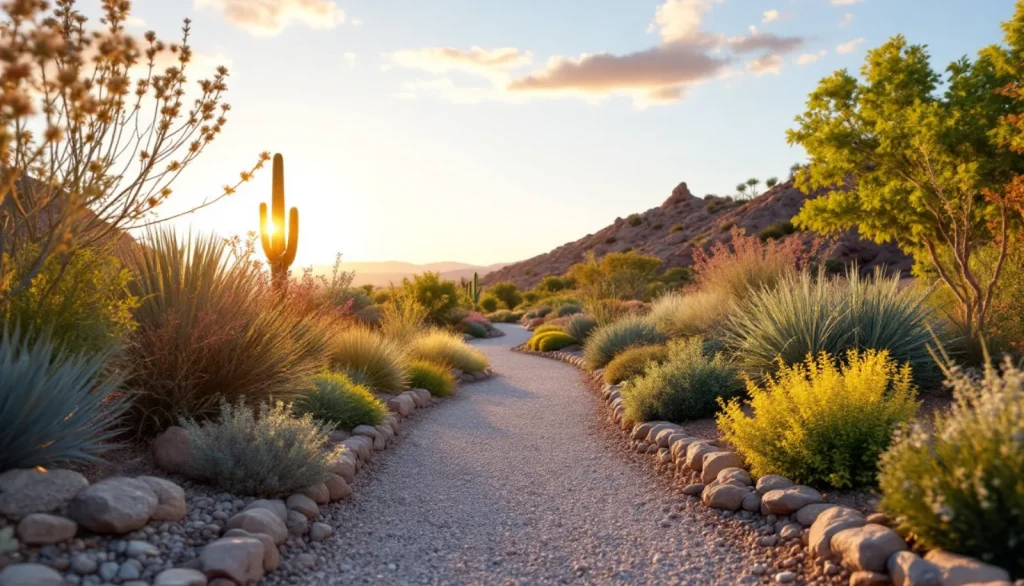
If you want to know how to prepare for a drought without losing your lawn, your trees, or your sanity, the short answer is: prepare in three phases (water audit, plant triage, irrigation retrofit) and time it 60 to 90 days before your local water utility issues mandatory restrictions. Reactive watering during a Stage 2 drought declaration is the most expensive way to keep a yard alive. Plan in spring, retrofit in summer, plant in fall. Below is the 12-step resilience plan that contractors actually run for clients in the West, Southwest, and Plains, with current 2026 rebate rates included.
The short version
- Phase 1 (audit): meter your irrigation runtime, soil-probe the root zone, and pull last 12 months of water bills. Most homes overwater by 40 to 60 percent.
- Phase 2 (retrofit): swap controllers for EPA WaterSense smart controllers (Rachio 3, Hunter Hydrawise, Rain Bird ESP-TM2 with LNK). WaterSense data shows 30 to 50 percent outdoor reduction.
- Phase 3 (replant): grass-to-xeric conversion. Rebates in 2026: Nevada $6.00/sq ft (cap 10,000 sq ft), California $2 to $4/sq ft, Arizona $0.50 to $3/sq ft, Colorado $1 to $3/sq ft, Utah $1.50/sq ft, New Mexico $1.50 to $2.50/sq ft.
- Mulch every bed 3 inches deep with shredded hardwood. Soil moisture loss drops roughly 65 percent versus bare soil.
- Mow tall (3.5 to 4 inches for cool-season, 2.5 to 3 inches for warm-season). Taller grass shades soil and cuts irrigation demand 20 to 30 percent.
- Switch to drip irrigation on every shrub bed before drought hits. Spray heads waste 30 to 50 percent to evaporation.
Step 1: Audit your current water use before you change anything
Pull 12 months of water bills. Most utilities show a winter baseline (indoor use only) and a summer peak (indoor plus irrigation). Subtract the winter baseline from each summer month and you have your outdoor water budget. Convert from gallons to inches over your lawn area using this formula: inches applied equals gallons divided by (square feet times 0.623). A 5,000 sq ft lawn that used 24,000 gallons in July received 7.7 inches that month, which is roughly double what most turfgrass actually needs in peak heat. Half your water is going somewhere it should not. Before you spend a dollar on conversion, get this number.
For an honest read on application rate per zone, run the tuna-can test. Place six empty tuna cans across each irrigation zone and run the zone for 15 minutes. Measure the depth in each can with a ruler. The average depth times four equals your hourly precipitation rate. Most spray-head zones run 1.5 to 2 inches per hour, which means a 20 minute cycle delivers 0.5 to 0.7 inches. Rotor zones run 0.4 to 0.6 inches per hour and need 45 to 60 minutes per cycle to match. If your zones are uneven (some cans full, some dry), you have head-to-head coverage problems that no controller upgrade can fix.
Step 2: Compare your three retrofit options on cost and water savings
| Retrofit | 2026 install cost | Water savings | Payback period |
|---|---|---|---|
| Smart controller swap (Rachio 3, Hunter Hydrawise) | $240 to $450 installed | 30 to 50 percent outdoor use | 1 to 2 seasons |
| Spray-to-drip conversion (beds only) | $1.80 to $3.50 per sq ft of bed | 50 to 70 percent on retrofitted zones | 3 to 5 seasons |
| Turf-to-xeric conversion (lawn replacement) | $8 to $16 per sq ft before rebate | 70 to 90 percent on converted area | 4 to 10 seasons with rebate |
| Mulch top-up (3 inches hardwood, all beds) | $0.50 to $0.90 per sq ft | 20 to 40 percent on bed water demand | 1 season |
| Soil amendment (compost, 1 inch worked in) | $0.45 to $0.75 per sq ft | 15 to 25 percent through better infiltration | 2 seasons |
The order matters. Controller and mulch first because the payback is fast and the disruption is low. Drip retrofit second because beds are the easiest place to cut without losing curb appeal. Lawn conversion last because it is the biggest spend and you want the rebate paperwork in hand before the trucks roll. See our lawn care cost guide for current contractor labor rates in your region.
Step 3: Pick the right smart controller
All three major EPA WaterSense partner controllers (Rachio 3, Hunter Hydrawise, Rain Bird ESP-TM2 with LNK module) hit the 30 to 50 percent reduction WaterSense documents. The differences are not water savings. They are usability and ecosystem. See our organic fertilizer for vegetable garden guide for more.
Rachio 3 is the homeowner favorite. Eight or sixteen zones, $230 to $310 retail, app is the best in the category, and it pulls from a public weather station network so it actually skips watering after real rain instead of forecast rain that never falls. Hunter Hydrawise is the contractor favorite because Hunter still owns most of the professional irrigation supply chain at SiteOne and Ewing. If your system uses Hunter PGV valves, the diagnostics integrate. Rain Bird ESP-TM2 with the LNK Wi-Fi module is the budget pick at $140 to $200 but the app is dated. All three qualify for utility rebates in Nevada, California, and most of Arizona, typically $50 to $100 off the unit.
Step 4: Convert spray zones in beds to drip before summer
Spray heads in shrub and perennial beds are the single biggest water waste in a typical residential system. Throw rate is 1.5 to 2 inches per hour and 30 to 50 percent of that flies off as evaporation before it hits soil. Convert beds to drip and you cut bed water use by half to two-thirds with no plant stress. The retrofit is not complicated: cap the spray heads (or pull them and plug with risers), tee into the lateral, and run 0.5 inch poly tubing with pressure-compensating emitters at each plant. Our drip irrigation install guide walks through the full sequence including pressure regulator and filter sizing.
Cost for a contractor-installed retrofit runs $1.80 to $3.50 per square foot of bed area in 2026. DIY material cost is roughly $0.60 to $0.90 per sq ft. The single most common mistake homeowners make is skipping the pressure regulator. Drip systems need 25 to 30 psi. Most residential supply is 50 to 80 psi. Without the regulator, emitters blow off the line within a season.
Step 5: Stack your state and utility rebates correctly
This is where homeowners leave the most money on the table. Rebates are not automatic, they are not stackable in every district, and the paperwork has to be filed BEFORE you tear out grass. Always pull a pre-conversion site inspection.
Nevada residents in the Las Vegas valley get the most aggressive rebate in the country. Southern Nevada Water Authority pays $6.00 per square foot of converted grass, with a cap of 10,000 sq ft per property. A 2,000 sq ft front-yard conversion pays back $12,000. California rebates vary heavily by water district. The Metropolitan Water District of Southern California baseline is $2 per sq ft, but San Diego County Water Authority, Santa Clara Valley Water, and East Bay MUD stack on additional district money that pushes the total to $3 to $4 per sq ft. Arizona is the most fragmented: Tucson Water pays up to $3 per sq ft, while most Phoenix-area utilities sit at $0.50 to $1 per sq ft. Colorado Front Range rebates run $1 to $3 per sq ft with Denver Water and Aurora Water leading. Utah’s Weber Basin and Jordan Valley districts pay $1.50 per sq ft. New Mexico utilities in Albuquerque and Santa Fe pay $1.50 to $2.50 per sq ft. For deeper detail on plant selection and rebate-qualifying designs, see our guide on drought-tolerant lawn alternatives.
Step 6: Triage your existing plants by water value
Before drought hits, walk the property with a clipboard and rank every plant in three buckets. Bucket A: keep at any cost (mature shade trees, signature specimens, anything over 15 years old). Bucket B: keep if convenient (established shrubs and perennials that are doing fine on current water). Bucket C: let go (annuals, struggling plants, anything that needs spray irrigation to survive a normal summer). When restrictions hit, your water budget collapses to maintenance level. You will not have enough water for everything. Knowing in May which plants are getting the last cup helps you avoid the panic-watering pattern where everything gets half what it needs and nothing survives.
Step 7: Mulch every bed 3 inches deep with shredded hardwood
Bare soil loses moisture 60 to 70 percent faster than mulched soil. Three inches is the threshold. Two inches barely helps. Four inches is fine but wasteful. Shredded hardwood mulch (cedar or pine bark) holds together and resists wind displacement. Avoid dyed mulch (the dye does nothing functional) and avoid rock mulch unless you are committed to xeric (rock holds heat and bakes adjacent plants, which is fine for cactus and bad for almost everything else). Mulch cost in 2026 is roughly $40 to $55 per cubic yard delivered. One yard covers about 100 sq ft at 3 inches. A 1,200 sq ft bed area needs 12 yards, roughly $500 to $660 delivered, $200 to $400 in labor to spread.
Step 8: Raise mowing height and let the lawn go dormant in extreme heat
Cool-season grasses (Kentucky bluegrass, tall fescue) should be mowed at 3.5 to 4 inches in summer. Warm-season grasses (Bermuda, Zoysia, St. Augustine) handle drought at 2.5 to 3 inches. Every additional half inch of grass height reduces irrigation demand 10 to 15 percent because the canopy shades the soil. If restrictions force you below maintenance water (typically less than half an inch per week), most cool-season turf will go brown and dormant. That is not death. Kentucky bluegrass can survive 4 to 6 weeks of dormancy and recover when water returns. Tall fescue is more sensitive and dies after 3 to 4 weeks. Knowing the species you have determines whether you can let it sleep or have to keep it on life support. See our brown patches guide to distinguish dormancy from disease.
Step 9: Water deep, infrequent, and early
The worst watering pattern in a drought is short daily cycles in the afternoon. The best is one or two long cycles per week before sunrise. Lawns need water to penetrate 6 to 8 inches into the root zone, which encourages deep roots that survive heat. Most spray-head zones need 25 to 35 minutes per cycle (split into three 10 to 12 minute pulses if the slope causes runoff) to push water that deep. Pre-sunrise watering (4 a.m. to 7 a.m.) cuts evaporation 30 to 40 percent versus afternoon watering. Smart controllers handle this automatically once you set the schedule.
Step 10: Soil amendments before replanting anything
If you are doing a lawn conversion or replanting beds, work 1 inch of high-quality compost into the top 6 inches of soil before planting. The cost is $0.45 to $0.75 per sq ft and the payoff is 15 to 25 percent better water infiltration plus 20 to 30 percent better root establishment. In sandy soils (most of Arizona, parts of Florida and the Carolinas), the compost adds water-holding capacity. In clay soils (most of Colorado, Utah, parts of Texas), the compost improves drainage and prevents the surface crust that sheds water sideways.
Step 11: Time the planting window correctly
Fall planting (mid-September through mid-November in most of the West) is roughly four times more successful than spring planting for drought-zone plants. Fall soil is still warm, the air is cooling, and roots have 6 months to establish before summer heat. Spring-planted xeric plants have to survive their first summer with a partial root system, which is why so many of them die in July. If you are budgeting a drought-prep year, plan the conversion design in spring, do the demo and soil prep in late summer, plant in October.
Step 12: Document everything for insurance and rebate audits
Take photos of the lawn before demo, during demo, and after install. Save every receipt. Pull the irrigation as-built drawings from your contractor. Rebate programs in Nevada and California audit roughly 10 to 15 percent of conversions a year and demand documentation. Insurance claims for drought-killed mature trees require photo documentation of the tree’s pre-drought health, which homeowners almost never have because nobody photographs healthy trees on a normal Tuesday. For more on documentation standards and water-utility rebate rules, our regulatory hub tracks updates by state.
FAQ
How long does it take to prepare a property for drought?
Plan on 4 to 9 months for a full retrofit. Smart controller plus mulch can be done in a weekend. Drip conversion on beds takes a contractor 2 to 5 days depending on size. Lawn-to-xeric conversion runs 2 to 6 weeks including rebate paperwork, demo, soil prep, planting, and inspection.
Will my homeowner’s insurance cover drought-killed trees?
Almost never. Standard HO-3 policies exclude drought as a named peril. The only exception is when a tree falls and causes property damage, which is covered, but the dying tree itself is on the homeowner. Photograph mature specimen trees every spring as part of property documentation.
Can I water my lawn during a Stage 2 restriction?
Depends on the utility. Most Western Stage 2 restrictions limit outdoor watering to 1 or 2 days a week, before 8 a.m. or after 6 p.m., with a 15 to 20 minute per zone cap. Stage 3 typically bans turf watering entirely and allows only hand-watering of trees and shrubs. Check your utility’s current stage before you set your controller.
Is artificial turf a good drought solution?
Functionally yes, financially mixed. Synthetic turf install runs $12 to $20 per sq ft in 2026, surface temperatures hit 150 to 170 degrees in summer sun (which kills adjacent plants and is unpleasant on bare feet), and most utility rebates explicitly exclude artificial turf because it does not provide the urban-heat-mitigation benefits of live plants. Some Nevada and Arizona programs still pay partial rebates, but California has been pulling synthetic turf eligibility since 2023.
Do I need a permit for an irrigation retrofit?
Smart controller swap and drip conversion almost never require permits. Lawn-to-xeric conversion above a certain size (typically 500 to 1,000 sq ft) triggers HOA design review in most subdivisions and triggers utility pre-inspection if you want the rebate. Major irrigation reroutes that touch the water meter or backflow preventer always require a permit and licensed plumber.
Bottom line
Drought preparation is a 12-step project, not a Saturday afternoon. The fastest payback moves are smart controllers and mulch. The biggest savings are lawn conversion plus rebates, which can fund themselves in Nevada and most of California. Do the audit first so you know how bad the bleed is, time the retrofit before mandatory restrictions hit, and document everything because rebate audits are real.
If you are starting from zero, the right sequence is: audit in March, smart controller and mulch in April, drip retrofit in May, design the xeric conversion in June, demo in August, plant in October. By the next summer you are running on 40 to 60 percent less water with a yard that looks better than it did before. For more on the conditions that drive utility restrictions in the first place, see our explainer on what causes drought and what it means for your landscape bill.