
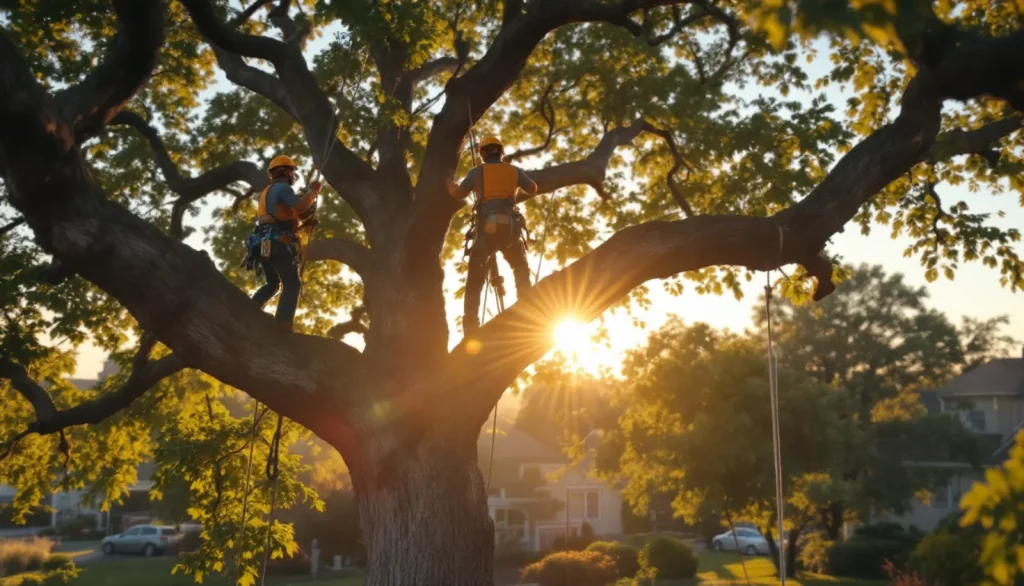
The Davey Tree employee-owned structure turned 47 years old in 2026 and the company itself turned 145. While private equity rolled up most of the top 10 landscape and tree-care firms over the past decade, Davey Tree Expert Company stayed independent through a 100% employee stock ownership plan, finished its fiscal year past $1.7 billion in revenue, and employed roughly 12,000 people. The Kent, Ohio company is now the largest non-PE-owned firm in the green industry and one of the largest employee-owned companies in the United States by headcount.
The short version
- Davey Tree founded 1880 by John Davey, 145 years old in 2026
- 100% employee-owned since the 1979 ESOP buyout, no outside shareholders
- Roughly $1.7B+ revenue and 12,000 employees as of FY 2025
- Operates 230+ offices across the US and Canada under Davey, Wolf Tree, and SavATree’s prior assets
- Independent while peers BrightView, SavATree, Yellowstone, Heartland went PE
- One of the largest ESOPs in the US by headcount, alongside Publix and HEB
What Davey is
Davey Tree Expert Company runs four business lines: residential and commercial tree care, utility line clearance (vegetation management for power companies), commercial landscape services, and consulting and research through the Davey Institute. The company operates more than 230 offices across the US and Canada, and its employees hold 100% of the equity through a debt-financed ESOP first established in 1979 when then-CEO Martin Erbaugh bought the company back from outside investors and put it in employee hands.
Annual revenue for fiscal 2025 came in above $1.7 billion based on company disclosures to the National Center for Employee Ownership and industry trade rankings, up from roughly $1.5 billion in 2023. Lawn & Landscape’s 2026 Top 100 list (March 2026) ranks Davey second in the green industry by revenue behind only BrightView and ahead of TruGreen on a green-services basis.
How Davey stayed independent
The 1979 buyout is the key event. John Davey founded the company in 1880 in Kent, Ohio, then sold a stake to outside investors in the early 1900s to fund expansion. By the 1970s, those shareholders had aged out and the company was a takeover target. CEO Marty Erbaugh organized a debt-financed ESOP, borrowed against the company’s cash flow, and bought the shares back. Employees received stock in their retirement accounts proportional to compensation. By the late 1980s the ESOP held 100% of the stock and outside ownership was zero. The structure has held since.
ESOPs in the US sit under ERISA. Employees vest in their share allocations over time (typically 6 years) and the company is required to repurchase shares from departing employees at the appraised fair market value. That puts long-term cash demand on the balance sheet, but it also locks the company into an employee-aligned capital structure that no PE firm or strategic acquirer can easily disrupt.
What it means while roll-ups acquire around it
The competitive picture has changed dramatically. BrightView, the largest commercial landscape firm, was taken private by KKR via One Rock Capital in late 2024 after a five-year public-company run. SavATree was sold to Apax Partners. Yellowstone Landscape was acquired by CIVC Partners. Heartland Tree by Carlyle. Monarch by Audax. TruGreen has been Clayton Dubilier & Rice and Bain Capital since 2017. See our coverage at lawn and landscape private equity in 2026 and the BrightView acquisitions tracker.
That leaves Davey, Bartlett Tree Experts (also employee-owned), Ruppert Landscape, and a handful of regional firms as the largest non-PE players in the top tier. Bartlett, founded 1907 and headquartered in Stamford CT, books roughly $400M to $450M. Ruppert, headquartered in Maryland, books around $300M+. Together with Davey, the employee-owned segment in the top 25 represents about $2.4 billion in revenue, holding its share against an aggressive PE wave.
Why it matters for the industry
For the labor market, Davey’s structure produces measurable differences. Turnover at Davey runs in the 18% to 22% range, below the industry average of roughly 35% to 45% for tree care and landscape services. ESOP allocations averaged about $42,000 per employee at fiscal year-end 2025 based on the National Center for Employee Ownership’s tracker, with senior arborists carrying balances well into six figures.
For utility customers (the largest of Davey’s four business lines), continuity matters. PE-backed competitors face periodic ownership change and management turnover. Davey’s structure offers a different value proposition: the same crews, the same supervisors, often the same regional managers for decades. ConEd, Duke, Southern Company, PG&E, and most major utilities run multi-year vegetation-management contracts where institutional knowledge has measurable value.
By the numbers
| Metric | Davey Tree (2025) | BrightView (FY24) | TruGreen (est.) |
|---|---|---|---|
| Revenue | $1.7B+ | $2.86B | ~$1.9B |
| Employees | ~12,000 | ~21,500 | ~16,000 |
| Ownership | 100% ESOP | KKR / One Rock | CD&R / Bain |
| Founded | 1880 | 1939 / 2014 | 1973 / 2014 |
| Headquarters | Kent, OH | Blue Bell, PA | Memphis, TN |
| Top revenue line | Utility vegetation | Commercial maintenance | Residential lawn care |
Sources: National Center for Employee Ownership, Lawn & Landscape Top 100, BrightView final 10-K filings, company disclosures.
The business lines
Davey’s utility services arm (DRG, Davey Resource Group) is the largest single line, running line clearance and vegetation management contracts for power utilities across the US and Canada. The work is recession-resistant because reliability standards require it, and the contracts are long-duration. Wildfire-driven regulation in California, Oregon, Washington, and Colorado has expanded the utility VM market materially since 2018. See our coverage of Cal Fire defensible space zones for the homeowner side of the same issue.
The residential and commercial tree care arm operates under Davey Tree Surgery (residential, US East Coast), Davey Tree Surgery Co. (utility, US West), Wolf Tree (Southeast), and several regional brands. Commercial landscape services were rebuilt after the company exited a couple of secondary markets in the 2010s and is growing again. The Davey Institute conducts research on tree biology, soil science, and integrated pest management.
What this means for operators looking at exits
Davey is not a buyer in the same sense as BrightView or SavATree, which actively roll up regional firms. Davey grows largely organically and through targeted strategic acquisitions, not by quarterly bolt-on deals. For an operator selling a $5 million to $50 million regional tree-care or landscape book, the PE-backed buyers are still the most active acquirers. Davey’s value to the industry is structural: it proves a national-scale operator can stay independent at 145 years old, and it sets a labor benchmark for the rest of the market. See our professional lawn fertilizer guide and turf maintenance pro guide for adjacent operational context.
FAQ
Has Davey ever considered going public or selling to PE?
Multiple offers have been reported in trade press over the decades. The ESOP structure makes a sale operationally difficult because the ESOP trustee owes fiduciary duty to plan participants, not to outside acquirers, and a sale at less than ESOP fair market value would face legal challenge.
How does the ESOP work mechanically?
Employees vest in ESOP allocations over time. The company contributes annually to the ESOP trust based on payroll, the trust holds 100% of company stock, and departing employees receive cash payouts based on the appraised fair market value of their vested shares. The company funds these payouts from cash flow.
Is Davey publicly traded?
No. Davey is a private company. The ESOP holds all the stock and the company does not file public quarterly reports, though it does disclose to the National Center for Employee Ownership and to industry trade publications.
What is the difference between Davey and Bartlett Tree?
Bartlett is also family-founded (1907) and employee-influenced but is not 100% ESOP. The Bartlett family retains majority control. Both companies focus heavily on residential tree care. Davey is larger and has the utility vegetation management line that Bartlett does not pursue at scale.
Could Davey be acquired hostile?
No. There are no public shares. The ESOP trustee would have to vote to sell, and any sale at less than fair-market ESOP value would violate ERISA fiduciary duties owed to plan participants.
The Davey Institute and brand equity
One asset that does not show up in revenue rankings is the Davey Institute, the company’s research and consulting arm. The Institute publishes peer-reviewed work on tree biology, urban forestry, soil science, and integrated pest management. It also operates the consulting arm that serves municipal urban-forestry departments, court-appointed arborist work, and corporate sustainability programs. Industry observers credit the Institute with both pricing power on consulting work and recruiting advantage for arborists who want to do research alongside production work. Few PE-owned competitors operate a comparable in-house research function because the payback period is longer than typical sponsor hold periods.
Bottom line
Davey Tree Expert Company hit 145 years in 2026, employed about 12,000 people, booked above $1.7 billion in revenue, and stayed 100% employee-owned through a PE consolidation wave that swallowed most of its peer set. The structure is durable, the labor metrics are better than the industry, and the company proves a national-scale green-industry operator can stay independent without trading control for capital.