
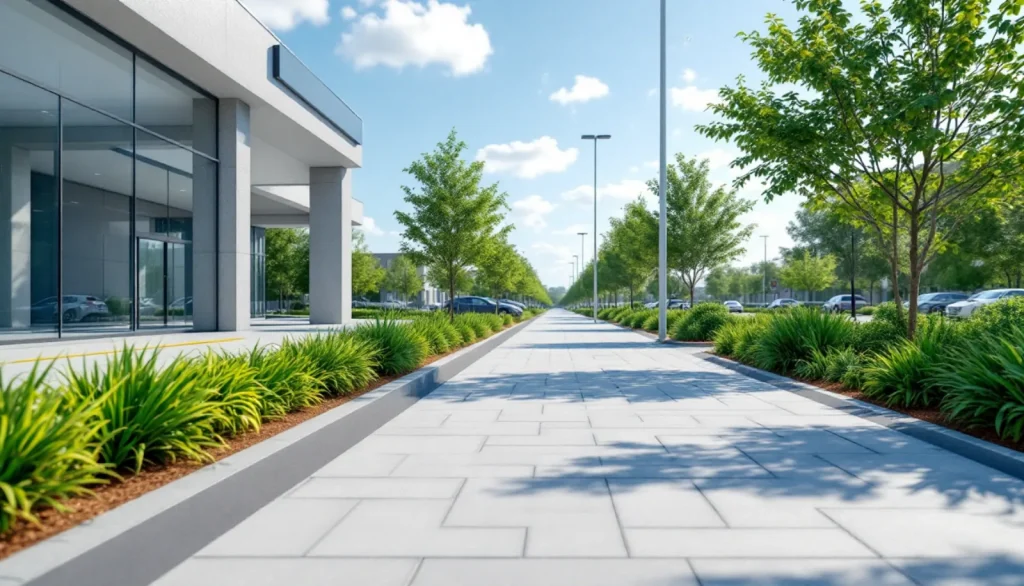
California SB 1157 non-functional turf ban is the first statewide law in the country that prohibits using drinking water to irrigate purely ornamental grass on public, commercial, and HOA-managed properties. Signed by Governor Gavin Newsom in 2024 and codified into the California Water Code, the statute sets a phased schedule that begins biting at the start of 2027 and reaches HOA common areas by 2028. For landscape contractors, water districts, property managers, and HOA boards, the clock is now running.
The short version
- SB 1157 bans potable water irrigation of non-functional turf at state and local public properties by January 1, 2027.
- Commercial, industrial, institutional (CII) sites and HOA-managed common areas must comply by January 1, 2028.
- Multi-unit residential ornamental turf is also captured by the 2028 deadline.
- “Non-functional” means turf that is solely ornamental, not used for recreation, civic events, sports, or pet relief.
- Single-family yards are exempt from the prohibition, but most rebate programs already incentivize voluntary removal.
- The State Water Resources Control Board is writing implementing regulations through 2026.
What the rule says
SB 1157 amends Division 1 of the California Water Code to prohibit the use of potable water to irrigate “non-functional turf” on covered properties. The statute defines non-functional turf as turfgrass that is solely ornamental and is not regularly used for human recreation, civic or community events, pet relief, or other functional purposes. Median strips, parking-lot perimeters, decorative entry strips, building setbacks, and lawn panels around corporate campuses are the textbook examples of ornamental turf the legislature had in mind.
The phasing matters. State agencies and local public properties (city halls, county complexes, transit medians, school district administrative campuses) hit the cutoff first on January 1, 2027. The CII category, which sweeps in shopping centers, office parks, hotels, warehouses, and industrial sites, follows on January 1, 2028. HOA-managed common areas and multi-unit residential ornamental turf are bound by the same 2028 date. School playing fields, parks used for recreation, athletic fields, cemeteries, and golf courses are explicitly outside the ban because they meet the functional-use test.
The State Water Resources Control Board (SWRCB) is drafting implementing rules through 2026 in consultation with the Department of Water Resources. Local water suppliers are expected to enforce the prohibition through their existing conservation ordinances, with civil penalties and water-budget surcharges as the most likely tools.
Why it matters for landscape operators
This is the single largest forced conversion of irrigated commercial turf in California history. The Pacific Institute and the Metropolitan Water District of Southern California have estimated that several hundred million square feet of non-functional turf will need to be either converted to drought-tolerant landscape, switched to recycled or graywater irrigation, or left to go dormant. Most CII property managers will choose conversion because dormant brown turf is a liability under HOA covenants and commercial-lease aesthetic clauses.
For commercial landscape contractors, the math is straightforward. A typical Class A office park in Orange County might carry 80,000 to 150,000 square feet of ornamental turf around parking lots, building perimeters, and entry monuments. At a delivered conversion cost of roughly $8 to $15 per square foot (turf removal, soil prep, drip irrigation retrofit, plants, mulch, two-year establishment), that is a project value of $640,000 to $2.25 million per asset. Multiply across the CII inventory in any major metro and the 2027 to 2028 window represents a multi-billion-dollar wave of work. Operators who have prepositioned design-build capacity, drip irrigation expertise, and bonded crews stand to capture most of it. See our coverage of the $186 billion US landscaping market and 2026 California turf removal rebates for context on the cash flow.
What property owners and HOA boards should do now
The biggest mistake property managers and HOA boards are making in 2026 is waiting for the SWRCB to publish final regulations before commissioning a site assessment. By the time the rules are public, qualified contractors will be booked, plant material will be back-ordered, and the rebate pots (which are first-come-first-served) will be drained. The right move is a three-step prep now:
First, commission a turf inventory. Walk the site with a contractor or in-house grounds team and classify every turf panel as functional or non-functional. Document with GPS-tagged photos, dimensions, and irrigation zone references. Most commercial sites discover 30 to 60 percent of their irrigated turf falls into the non-functional bucket.
Second, get a conversion estimate and stack it against the available rebate. SoCal Water$mart pays $3 per square foot, LADWP runs $3 to $5, and West Basin MWD dropped from $7 to $4 per square foot on January 15, 2026. A site with 50,000 square feet of non-functional turf can collect $150,000 to $250,000 in rebate against a $400,000 to $750,000 project cost.
Third, get on a contractor’s 2027 calendar. The licensed-landscape-contractor labor pool in California is finite, and large CII conversions take 4 to 9 months from contract to completion. HOA boards that wait until late 2027 to award contracts will not meet the January 1, 2028 deadline.
By the numbers
| Property type | Compliance deadline | Status |
|---|---|---|
| State and local public properties | January 1, 2027 | Hard cutoff |
| Commercial, industrial, institutional (CII) | January 1, 2028 | Hard cutoff |
| HOA-managed common areas | January 1, 2028 | Hard cutoff |
| Multi-unit residential ornamental turf | January 1, 2028 | Hard cutoff |
| Single-family residential yards | Not covered | Voluntary, rebate-eligible |
| School playing fields, parks, athletic fields | Exempt (functional use) | Continue irrigation |
| Cemeteries, golf courses | Exempt (functional use) | Continue irrigation |
Background and context
SB 1157 was authored by Senator Steve Padilla and co-sponsored by the Natural Resources Defense Council, the Pacific Institute, and a coalition of urban water suppliers. The bill drew on lessons from Nevada’s pioneering Assembly Bill 356 (2021), which banned non-functional turf in the Las Vegas Valley and produced a documented 26 percent reduction in Southern Nevada Water Authority outdoor demand. California legislators looked at Nevada’s results, looked at the third multi-year drought in a decade, and concluded that voluntary rebate programs alone would not move the needle fast enough.
The statute fits into a stack of California water-conservation rules that include MWELO (the Model Water Efficient Landscape Ordinance) for new construction, the statewide indoor water-use standard of 47 gallons per capita per day, and the urban water supplier “make conservation a California way of life” framework signed into law in 2018. SB 1157 closes the loop on existing landscapes, which MWELO and indoor standards do not touch.
Industry pushback has been muted compared with the early MWELO debates. The California Landscape Contractors Association (CLCA) lobbied for clarity on the functional-use definition and won language carving out pet relief areas and civic event lawns, but did not oppose the bill on the merits. Most CLCA members view conversion work as a net positive for the trade.
FAQ
Does SB 1157 cover my single-family home yard?
No. The prohibition applies to state and local public properties, CII sites, HOA-managed common areas, and multi-unit residential ornamental turf. Single-family residential yards are not covered. That said, every major urban water supplier in California offers a turf-removal rebate, and many cities have voluntary lawn-replacement ordinances that may apply.
What counts as “functional” turf?
Turf that is regularly used for human recreation, civic or community events, pet relief, or other functional purposes. Park lawns, athletic fields, school playgrounds, cemetery sections, golf course playing surfaces, designated dog runs, and event lawns at municipal facilities are all functional. Median strips, decorative parking-lot edges, building setback strips, and HOA entry monuments are not.
Can I irrigate non-functional turf with recycled or graywater?
Yes. The ban is on potable (drinking) water specifically. Recycled water, graywater, captured stormwater, and onsite reuse systems are all allowed. Several large commercial campuses in Orange County and the South Bay are already retrofitting recycled-water service rather than removing turf.
Who enforces the rule?
Local water suppliers will enforce through existing conservation ordinances, with backstop authority at the State Water Resources Control Board. Expect water-budget surcharges, drought-violation citations, and (in some districts) flow restrictors as the primary tools. Civil penalties under the Water Code can reach $10,000 per day for willful violations.
Are there exemptions or hardship waivers?
The SWRCB is expected to publish a narrow hardship-waiver process in 2026. Historical-significance designations, demonstrated economic infeasibility, and recycled-water availability constraints are the categories most often discussed. Operators should not plan around getting a waiver.
Bottom line
SB 1157 is not a future problem. State and local public properties have less than seven months to convert non-functional turf, and CII and HOA properties have less than 19. The contractors, designers, and irrigation specialists who win this wave are the ones taking client meetings now, walking sites now, and pricing conversions against the current rebate stack. The ones who wait until 2027 will be quoting against booked competitors and depleted rebate pots. See our companion coverage of 2026 California turf rebates, MWELO design requirements, and the broader regulatory pillar for the full compliance picture, and the drought-tolerant lawn alternatives guide for the design playbook on what to plant after the sod comes out.